

Promoting Black Youth Mental Health Through Policy in Georgia
In 2022, Morehouse School of Medicine (MSM) partnered with Voices for Georgia’s Children, VOX ATL, and the Georgia Health Policy Center (GHPC) for the Promoting Black Youth Mental Health (BYMH) project. The US Department of Health and Human Services, Office of Minority Health granted eight awardees more than $1 million over three years toward this project. As one of the awardees, MSM implemented and evaluated the effect of innovative policy approaches that promote positive Black youth mental health outcomes in Georgia.
The Promoting Black Youth Mental Health project was grounded in a commitment to amplifying youth voice. The project supported an intergenerational advisory council that guided key decisions. The council selected three youth-serving communities to implement a youth-chosen policy solution focused on “increasing opportunities for peer-led and peer-informed mental wellness activities”. Using the BYMH Policy Assessment Framework, the project identified, assessed, and informed strategies to strengthen policies affecting Black youth mental health statewide. Through meaningful collaboration between youth and adults, the project demonstrated how shared leadership can elevate youth perspectives, inform policy development, and drive solutions that truly reflect the needs and experiences of Black youth.
Georgia and Black Youth Mental Health
In Georgia, notable disparities in mental health outcomes among Black youth spotlight the urgent need for targeted policy interventions. This project piloted the Office of Minority Health Black Youth Mental Health (BYMH) Policy Assessment Framework (PAF) to assess whether and to what extent policies align with the needs of Black youth and drive impactful change. Understanding the perspectives and experiences of Black youth and actively engaging youth voices in research is crucial for developing effective intervention strategies that address their primary concerns and needs. Intentional power-sharing among youth and adults is a vital component of effective youth engagement. Youth leadership in policy decision-making is imperative to allow them the opportunity to create impactful change among their peers.
Project Impact
- We engaged over 300 youth, mentored 30 youth leaders, and facilitated power-sharing between 60 youth and adults.
- We created a community-based participatory action research (CBPAR) model that can be replicable, scalable, sustainable, and effective at addressing the issue of mental health professional shortages by building community capacity.
- We demonstrated that peer-led mental wellness activities are relatable, in demand, and produce positive impacts.
- We demonstrated that authentic youth-adult partnership increases skills, such as facilitation, leadership, and project management, that are essential for real progress.
- We demonstrated that creating a safe space, utilizing practices such as developing shared language and ground rules, are vital to sustained youth engagement.
- We published three academic manuscripts, trained 5 youth focus group facilitators, mentored 10 first-time authors, and delivered 9 presentations.
- Youth leadership improves the efficacy of mental health programs created through policy. When youth are able to access and utilize such programs, they build resilience and foster strong peer-adult connections.
BYMH Policy Assessment Framework
The BYMH Policy Assessment Framework (PAF) serves as a structured tool to evaluate how policies impact Black youth mental health and guide meaningful policy change. The Advisory Council (AC) was tasked with using this framework to identify and assess existing policies that influence BYMH, generating findings that would inform a strategic pathway for policy reform and implementation. The PAF includes four interconnected phases that move from understanding the policy landscape to driving action. These phases are (1) policy identification, (2) policy assessment, (3) strategic reform and implementation, and (4) policy evaluation. Together, they provide a clear process for translating evidence and youth voice into policy solutions that improve mental health outcomes for Black youth.
Intergenerational Advisory Council and Policy Solutions
The project’s chosen policy solution was: "Increased opportunities for peer-led and peer-informed mental wellness activities". This addresses the crucial need for culturally relevant mental health support for Black youth by endorsing programs facilitated by peers in familiar environments, such as schools and community centers. The policy was chosen by an Advisory Council made up of Black youth, community stakeholders, and experts, and reinforced by youth-led focus group insights. The policy emphasizes the effectiveness of peer-led efforts in reducing stigma, fostering open conversations about mental health, and promoting healthy practices. It reflects a commitment to integrating empowering, supportive, and engaging mental wellness support into the institutions that serve young people, aiming for widespread implementation in Georgia's educational and community settings.
Youth Engagement
Youth engagement was embedded into every stage of the BYMH project, reflecting our commitment to amplifying youth voice, sharing power, and ensuring that young people shape both the process and outcomes. From the outset, we established an advisory council focused on a youth-adultthat guided all major activities using a consensus-building approach. This council brought together youth, adults, and community partners to co-design meetings, content, trainings, and decision-making processes. This strategy created a truly multigenerational structure that strengthened the project’s impact.
Partnerships with youth engagement organizations were essential, offering expertise on what meaningful engagement looks like and how to avoid performative or surface-level participation. Their guidance informed our power sharing mechanisms, meeting facilitation strategies, and the overall design of the advisory council.
Youth were not only contributors but co-creators and leaders. Several youth served as co-authors on project publications, and one youth member of the advisory council was later hired as a youth engagement specialist on the project team. Throughout the project, meetings began with intentional relationship building activities to strengthen trust, reinforce power sharing principles, and ensure youth felt fully supported in stepping into leadership roles.
This intentional approach to youth engagement ensured that young people shaped the direction, tone, and substance of the work, ultimately grounding the BYMH project in authentic lived experience and collective leadership.
Youth Led Products
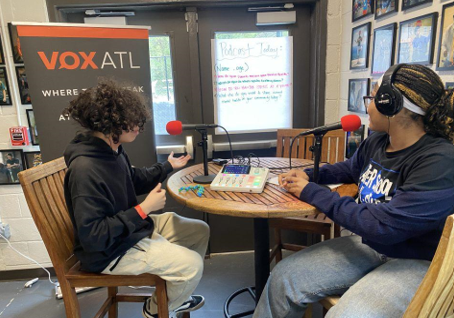
The BYMH project centers youth-led products because young people deserve to tell their own stories through their own lens. Instead of being token participants, they serve as co-creators whose lived experiences, insights, and creativity shape every stage of the work. When youth lead the design, message, and delivery of mental health content, the result is more honest, culturally grounded, and resonant with their peers. This approach ensures that solutions are rooted in real needs, real voices, and real experiences, not assumptions from adults. Click the links below to check out the content the youth participants produced.
Our Publications
Our publications reflect a commitment to elevating youth voice, advancing community-engaged research, and contributing to the field of Black youth mental health. Through this work, we published three academic manuscripts that share new insights, community-centered findings, and youth-informed solutions. We also trained five youth focus group facilitators and mentored ten first-time authors. These trainings provided young people and emerging scholars with the tools to shape the narrative of mental health equity. In addition, our team delivered nine professional presentations across local and national platforms, expanding the reach and impact of our work. These publications and presentations reflect our dedication to rigorous scholarship, authentic youth partnership, and meaningful community impact.
- Amplifying Youth Voice to Promote Black Youth Mental Health Through Policy in Georgia
- Bridging Generations: Youth-Adult Partnership for Black Youth Mental Health Policy Innovation in Georgia
- Evaluation of a Youth-Adult Partnership Advisory Council for Black Youth Mental Health Policy Innovation in Georgia
Partners

Advisory Council

Sites
This webpage will be edited. Check back regularly for updates.
This project is supported by the Office of Minority Health of the U.S. Department of Health and Human Services (HHS) as part of a financial assistance award totaling $1,199,397.00 with 100 percent funded by OMH/OASH/HHS. The contents are those of the author(s) and do not necessarily represent the official views of, nor an endorsement, by OMH/OASH/HHS, or the U.S. Government. For more information, please visit please visit https://www.minorityhealth.hhs.gov/. Award #: CPIMP221332